News

University of Łódź Student at the World Forum for Democracy in Strasbourg!

5 November 2025

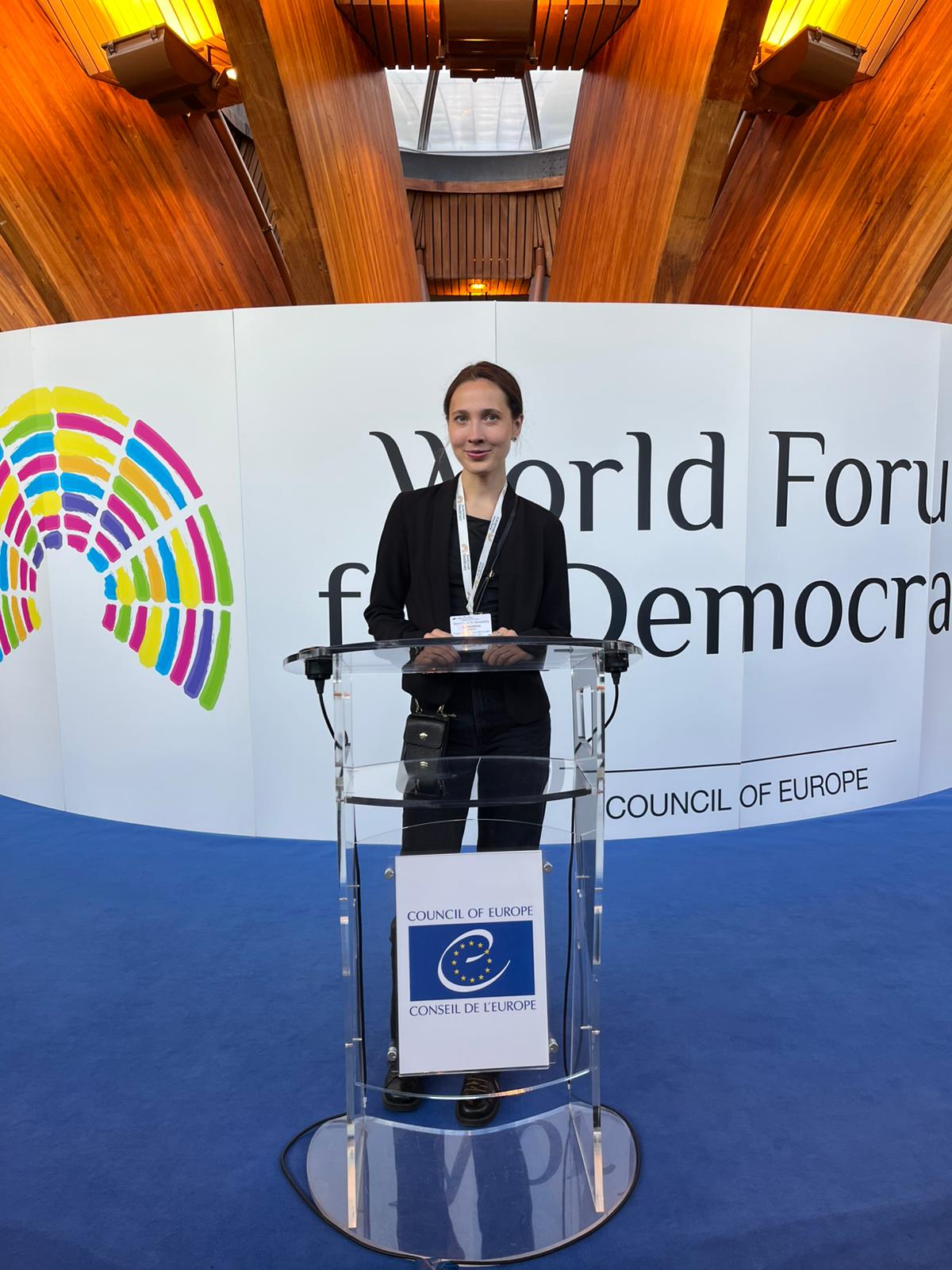
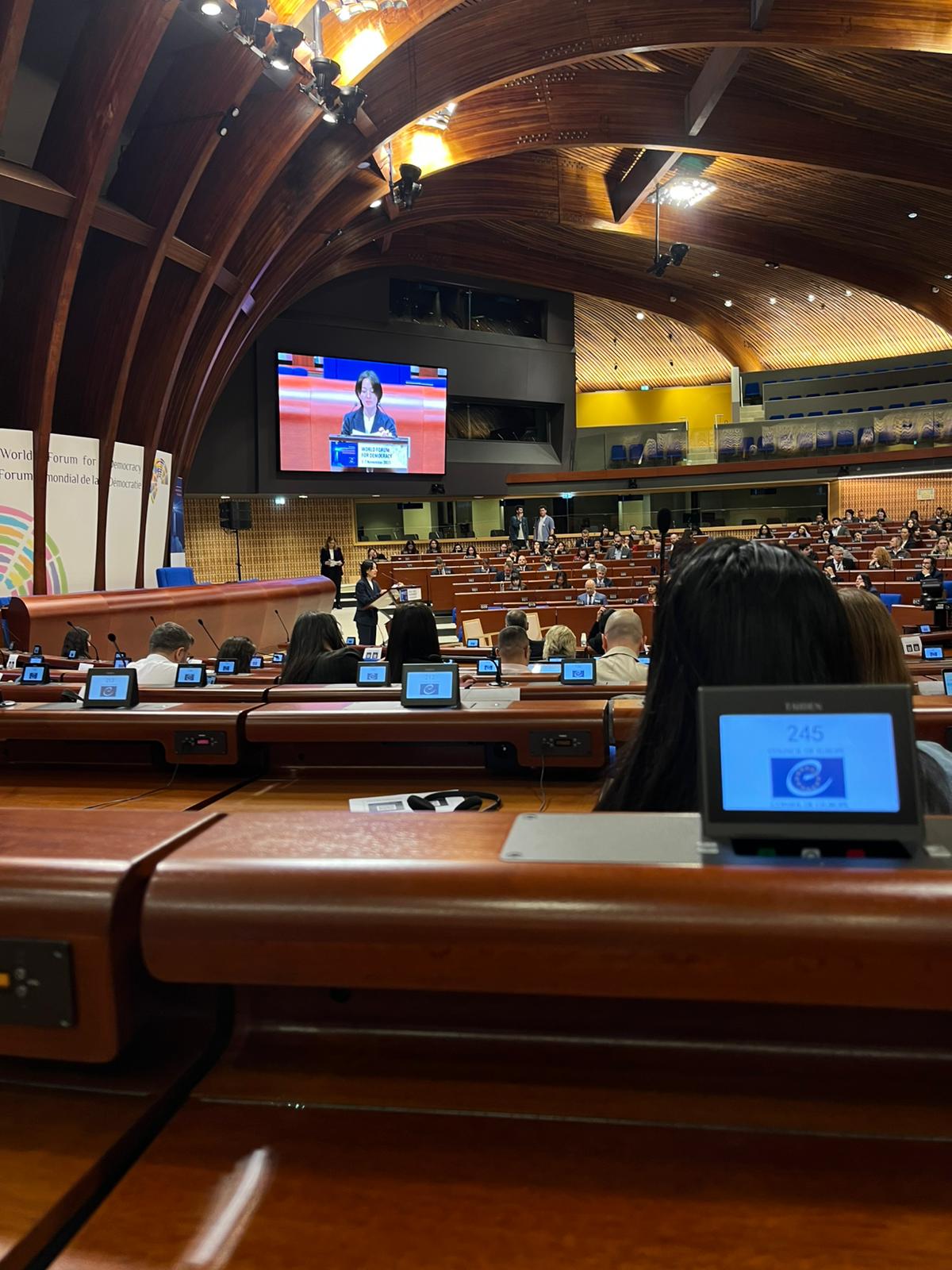
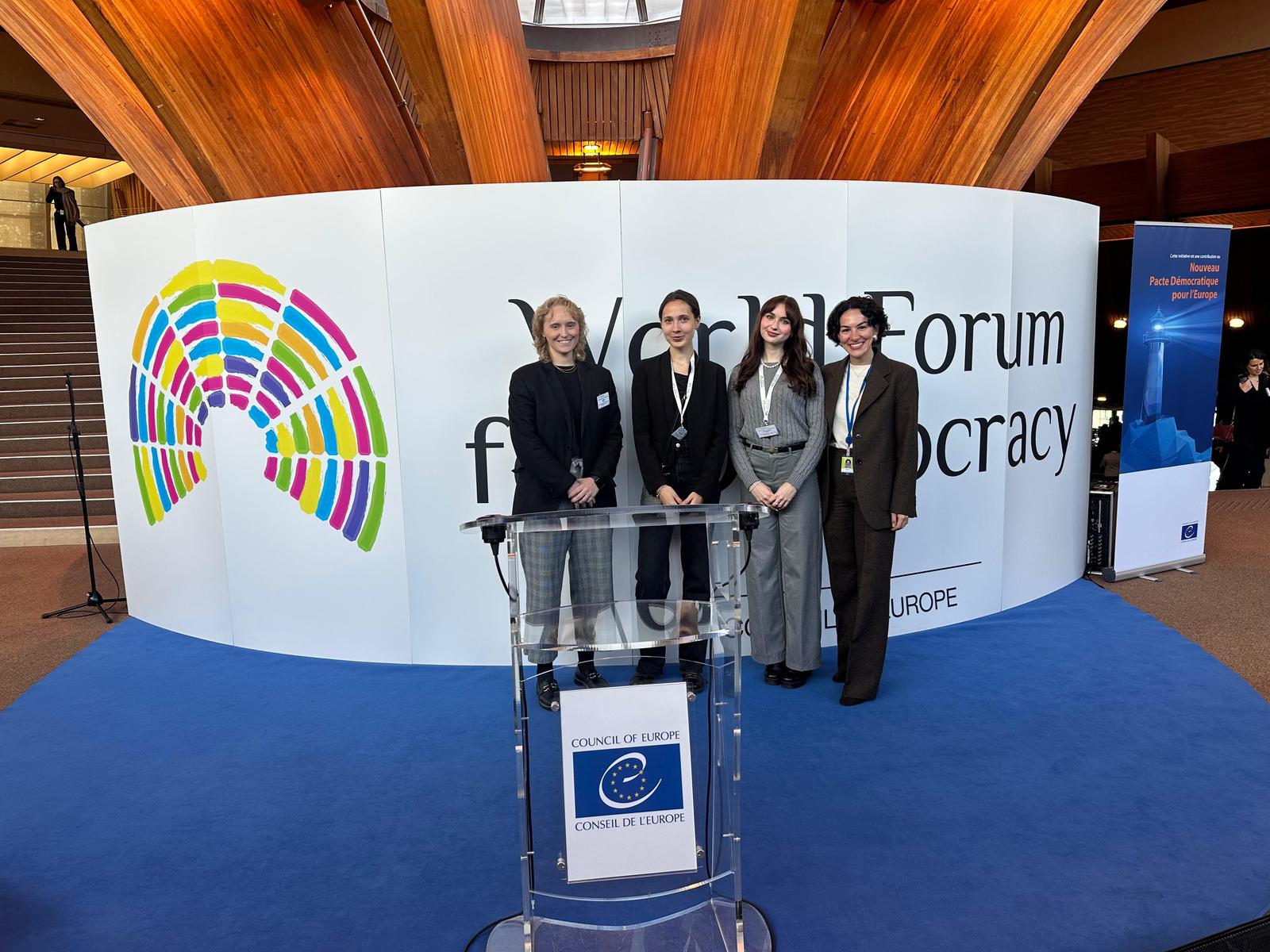
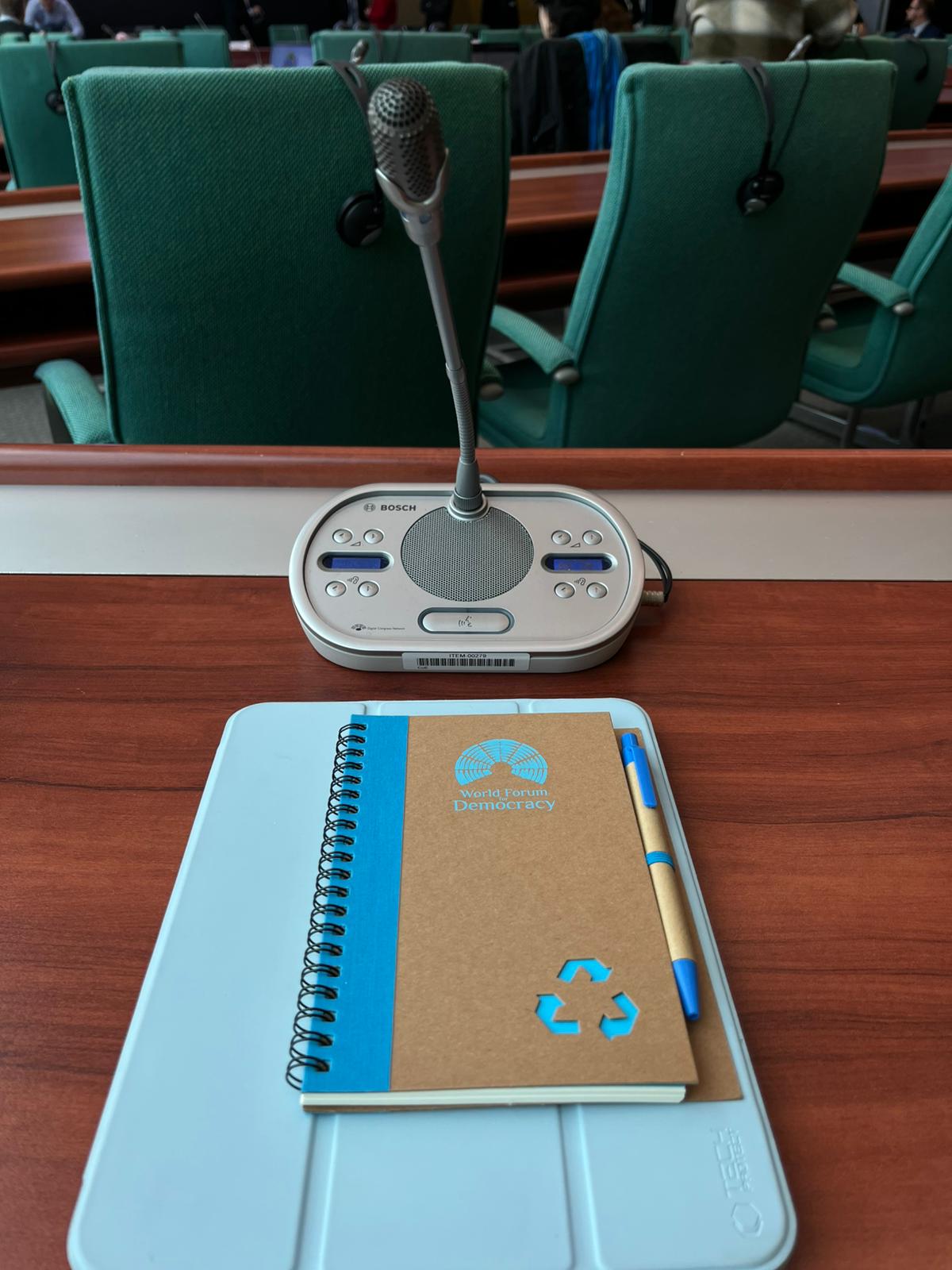
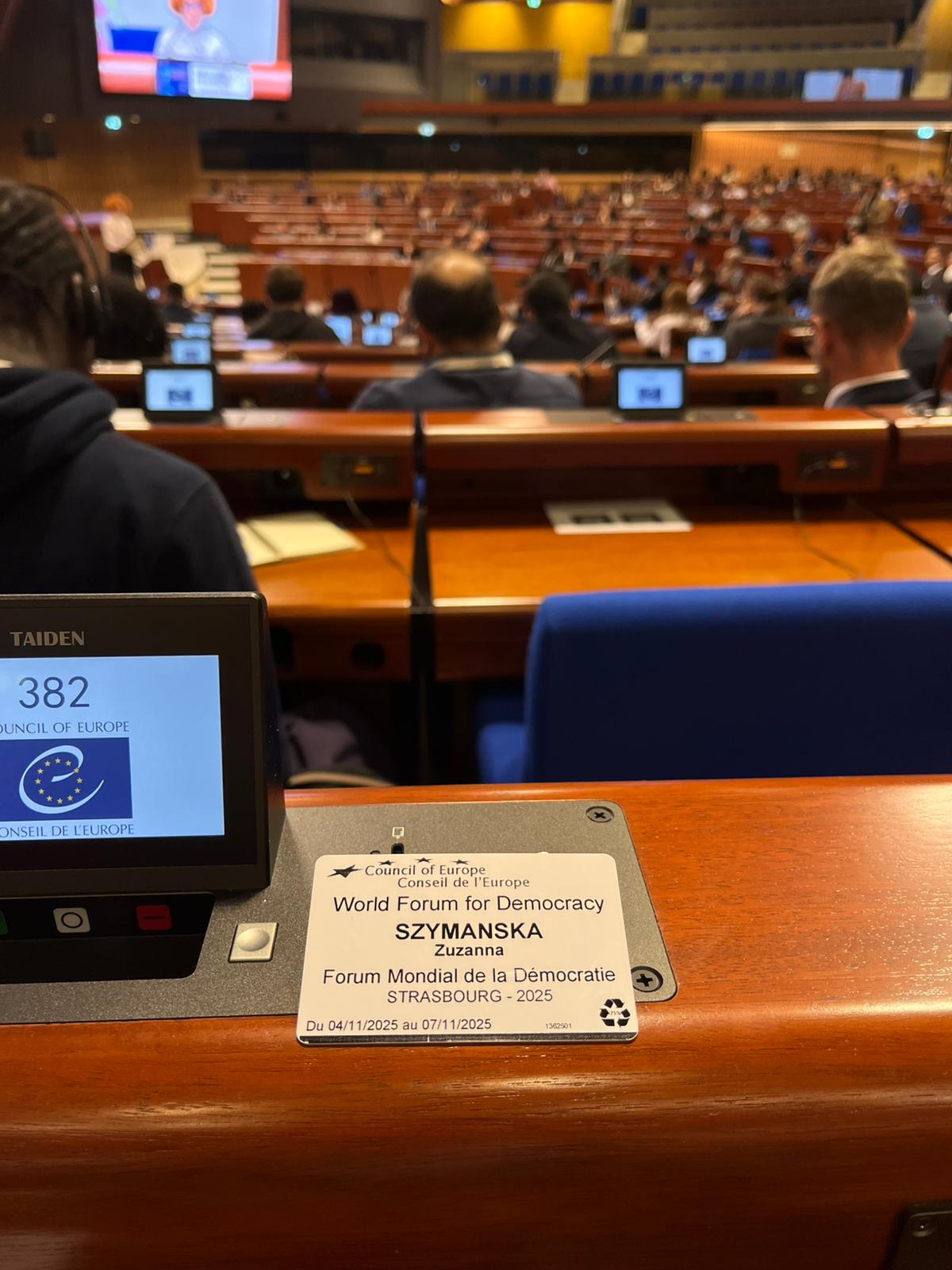
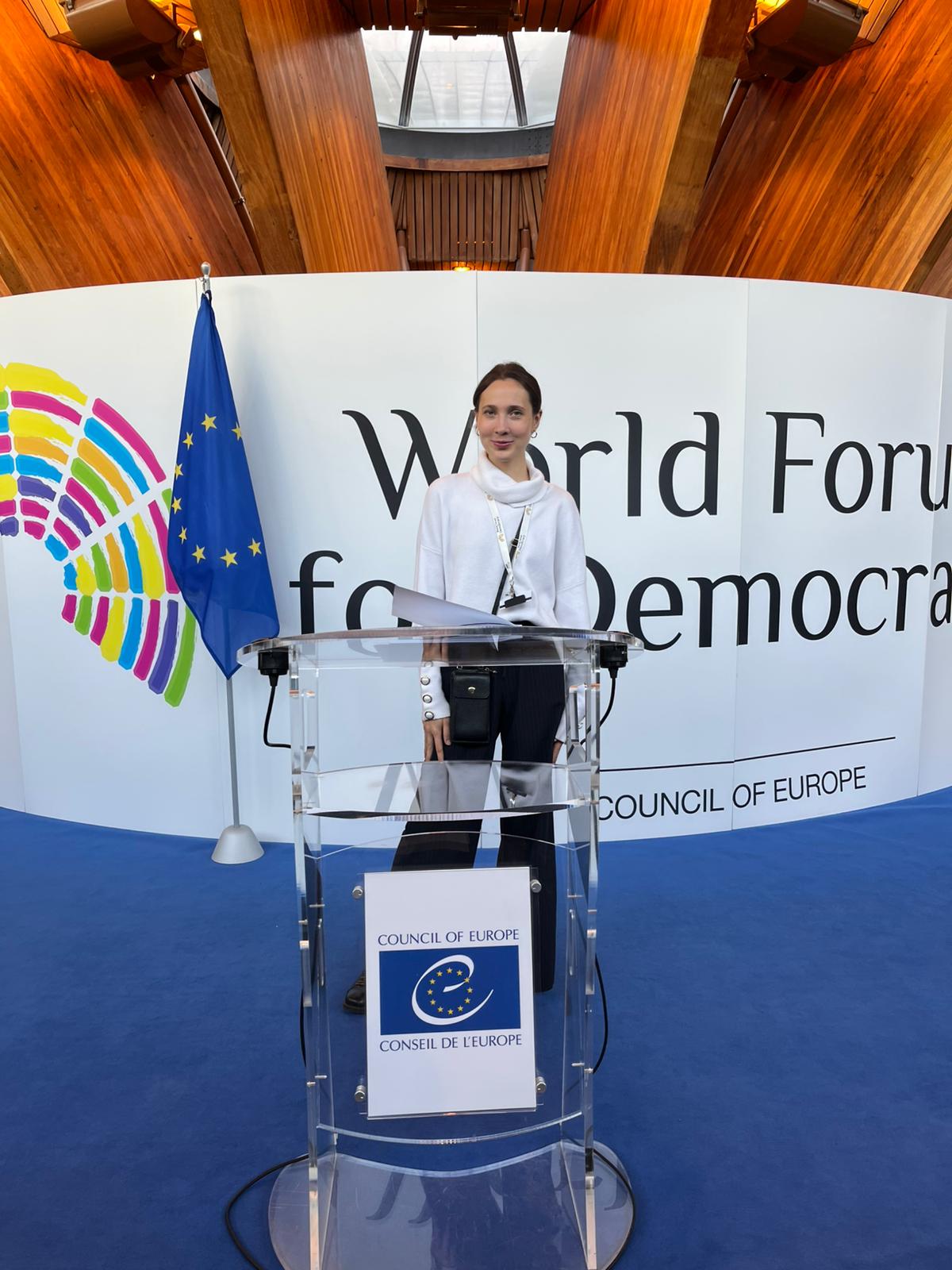
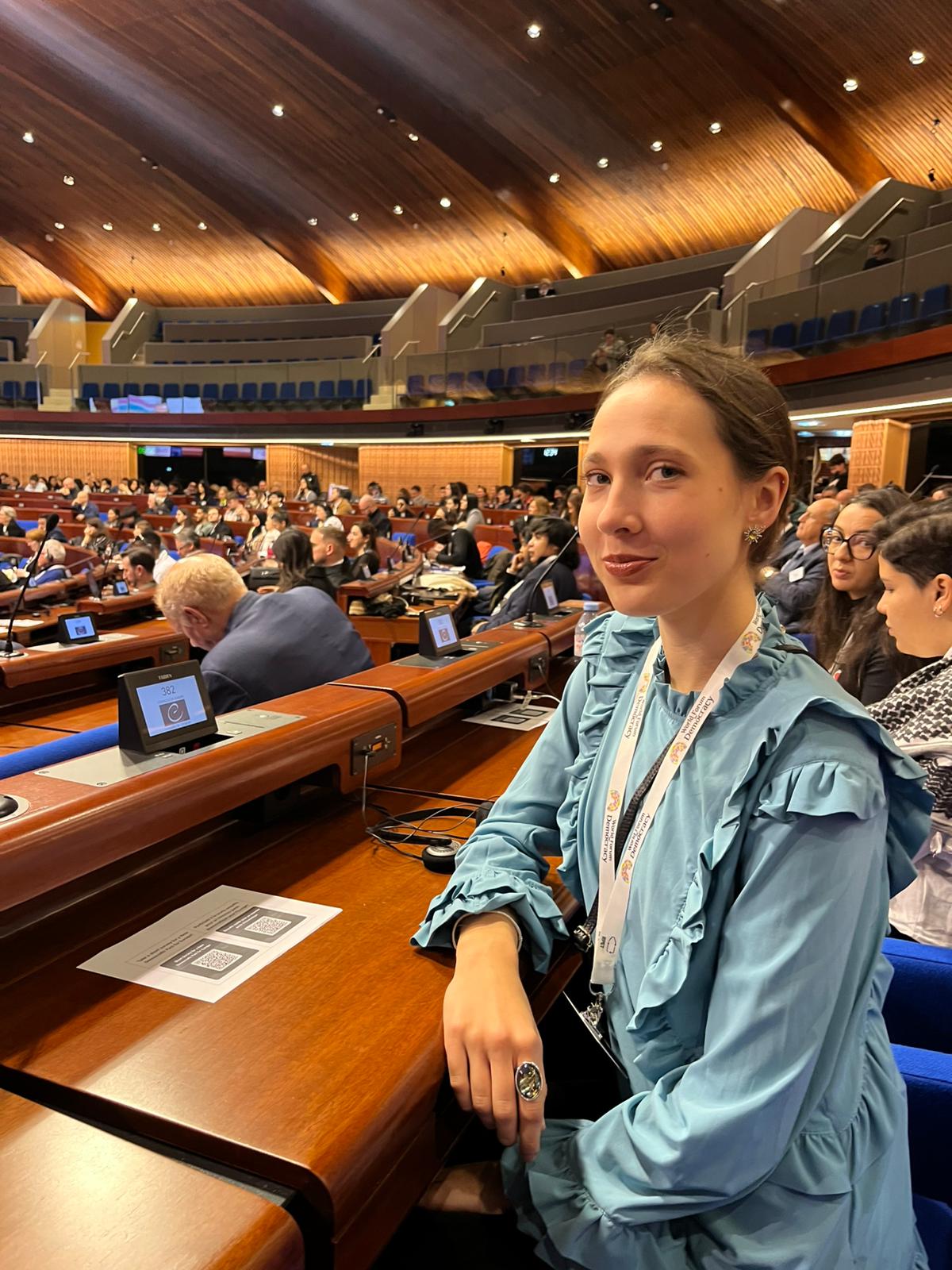
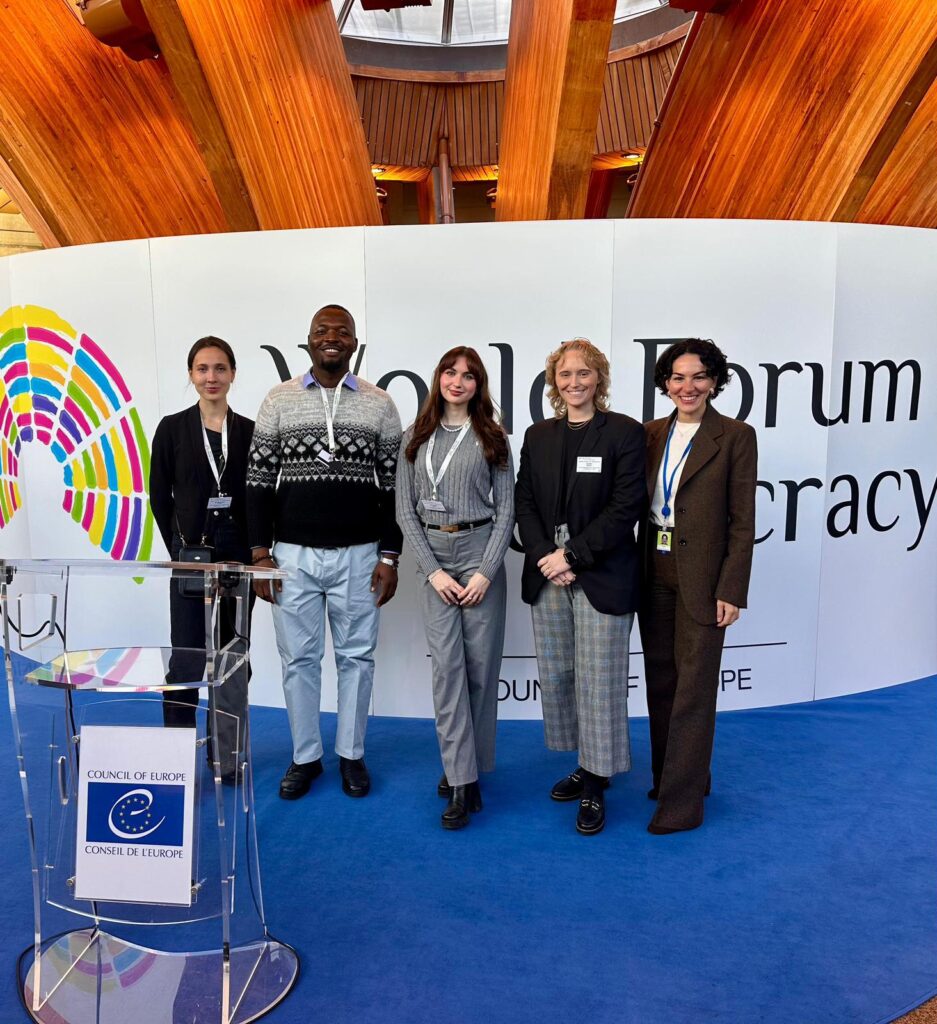
In November 2025, Zuzanna Szymańska, a pedagogy student at the Faculty of Educational Sciences of the University of Łódź, represented her university at the World Forum for Democracy, held in Strasbourg from 5–7 November. The flagship event of the Council of Europe brings together politicians, researchers, activists, and other participants from around the world to discuss current challenges facing democracy.

The 2025 Forum focused on the growing challenges to democratic participation and trust. Global survey data point to increasing dissatisfaction with democracy, linked among other factors to economic inequality, rapid technological change, and the feeling that citizens’ voices are being ignored. Against this backdrop, the Forum explored how democratic culture can be strengthened, how citizens can be supported to participate meaningfully, and how democratic institutions can remain resilient in a changing social and digital environment.

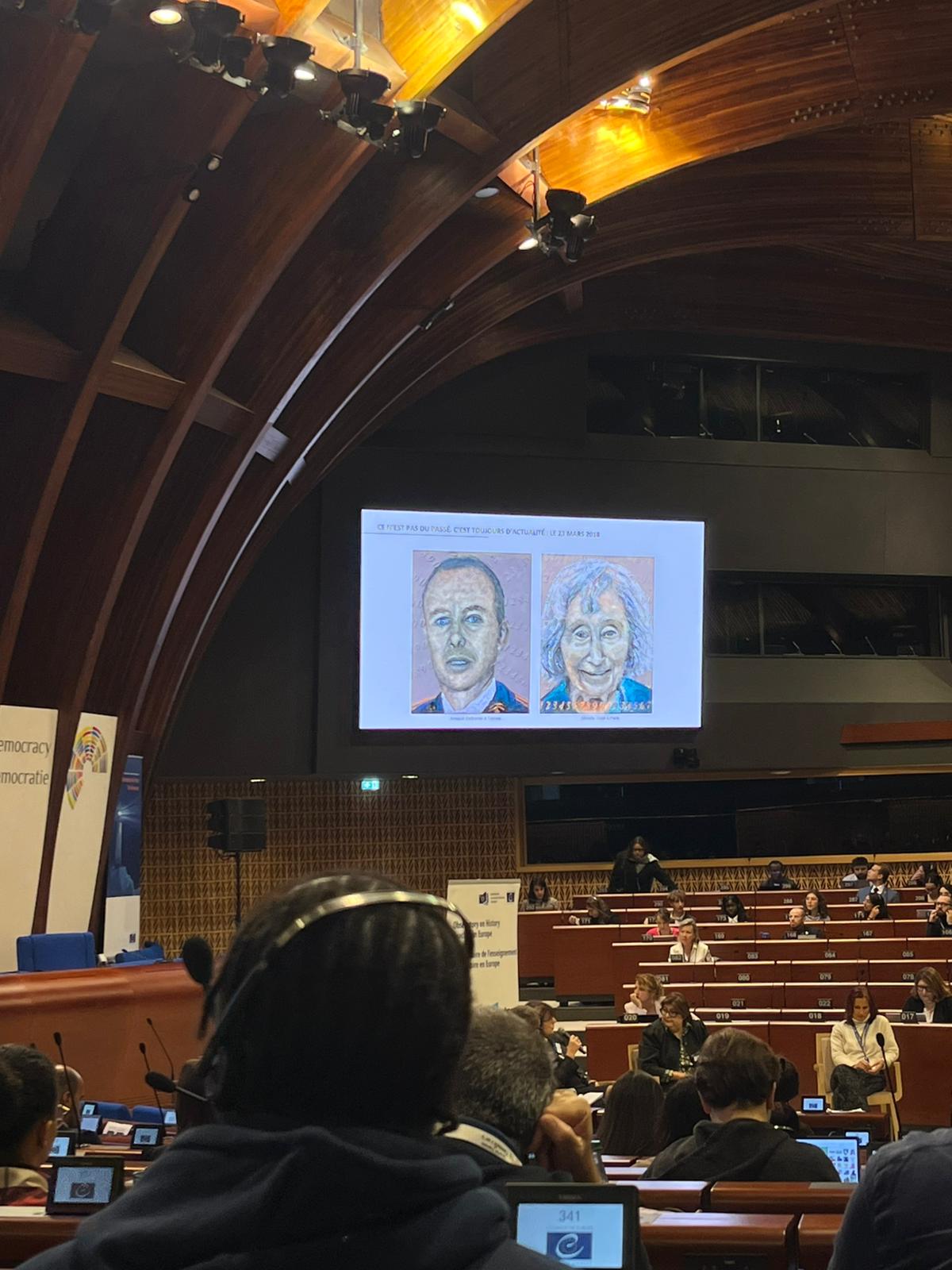
Particular attention was given to the role of young people and digital technologies in shaping the future of democracy. As some of the most active users of digital platforms, young people are both exposed to new forms of political communication and manipulation and have significant potential to contribute to democratic life. The Forum also considered the role of media, arts, culture, education, civil society, and participatory democracy in creating more informed, pluralistic, and inclusive public debate.

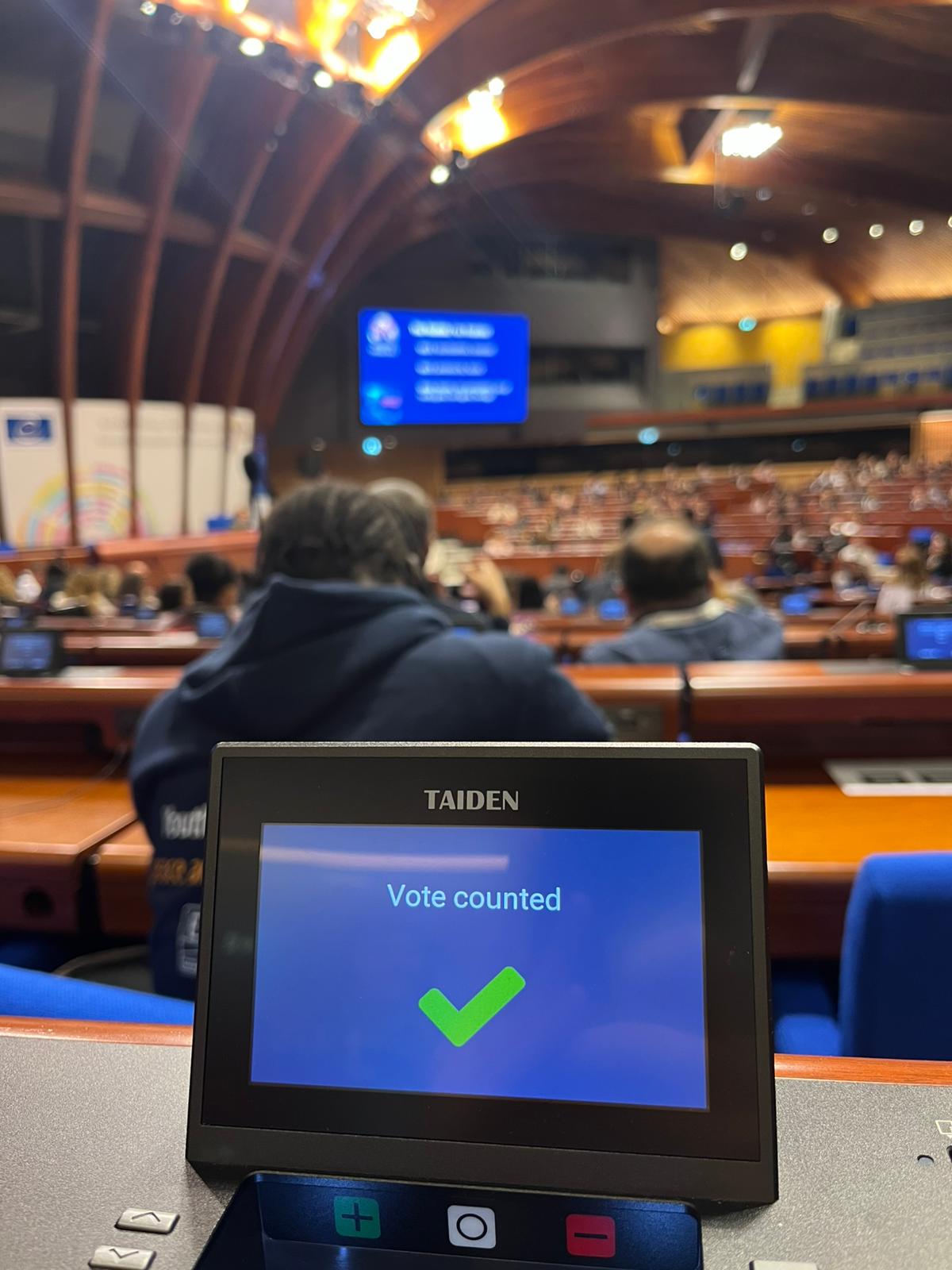
During the Forum, Zuzanna took part in debates and voting sessions focused on opening democratic spaces for disadvantaged communities. Her participation offered an opportunity to bring perspectives from her academic and research work into an international discussion on inclusive and participatory democracy.

Zuzanna’s involvement was connected to the Horizon project YOUROPE – Youth for Europe, led by Prof. Mariusz Granosik. As part of the project, she conducted research on discriminatory practices affecting young people in the workplace, under the supervision of Dr Anna Jarkiewicz. Her participation in the Forum therefore connected her research experience with broader European discussions about participation, inclusion, and the role of young people in democratic processes.

The World Forum for Democracy is part of the Council of Europe’s wider work towards a New Democratic Pact for Europe, a strategic and political consultation process aimed at reinforcing the foundations of democracy, restoring trust, and exploring new forms of democratic participation. The outcomes of this process are intended to inform the future work of the Council of Europe and contribute to making democracy more tangible and meaningful for all.

For Zuzanna and the YOUROPE project, participation in the Forum provided an opportunity to contribute to these wider conversations and to connect research on young people and communities with international debates about the future of democracy.

Learn more: World Forum for Democracy 2025

Framework and Toolkit

Youth-informed theory and a practical EU Citizenship Toolkit
 
Where the road leads: a grassroots-informed theoretical framework on European citizenship and democracy, built from the ground up on youth perspectives, and a youth-centred EU Citizenship Toolkit that turns these insights into practical resources for educators, youth workers and young people themselves. Results are expected in 2027.

Main Survey

Measuring what matters, in language grounded in youth voices
 
The findings of the exploratory survey feed directly into the design of the main survey: a larger instrument grounded in young people’s own language, experiences and priorities. Instead of asking young people to respond to researchers’ categories, the main survey measures what matters in terms young people themselves have shaped.

Exploratory Youth Survey

Learning from young people in their own words
 
Rather than starting from predefined assumptions, YOUROPE wants to learn directly from young people in their own words. This exploratory survey invites young people across Europe to share their views and experiences on citizenship, democracy, participation, inclusion and digital life. It is anonymous, voluntary, available in nine languages, and takes 10–15 minutes: an important first step in a co-creation process that places youth voices at the centre of the research.

Research Foundations

Policy analysis and systematic literature review

Every roadmap needs a starting point. WP3 began with two parallel strands of research: a policy analysis mapping how youth citizenship and democratic participation are addressed across Europe, and a systematic literature review of what existing research tells us about young people, democracy and participation. Together, these form the evidence base of WP3 and are published as part of the WP3 report.

Dialogue Map

Turning findings into conversations on the dimensions of democratic life 
 
Building on the research findings, the team in Augsburg developed the Dialogue Map: a tool that turns what we learned into conversations. It is organised around key dimensions of democratic life, from youth voice and European citizenship to participation, inclusion and digital citizenship, each with a key question and discussion prompts to open up dialogue with and among young people.

D6 · Dimension

Digital Citizenship

Digital environments as civic and political space

KEY QUESTION
What does it mean to be a citizen online?
DISCUSSION PROMPTS

D5 · Dimension

Inclusion and Justice

Structural inequalities and intersecting identities

KEY QUESTION

Do you think everyone has equal opportunities to participate in society?

DISCUSSION PROMPTS

D4 · Dimension

Participation and Power

Procedural vs. substantive participation

KEY QUESTION

When does participation actually make a difference in your life?

DISCUSSION PROMPTS

D3 · Dimension

European Citizenship

Europe as lived democratic space

KEY QUESTION
What does ‘Europe’ mean to you in your everyday life?
DISCUSSION PROMPTS

D2 · Dimension

Youth Voice & Knowledge

Young people as knowers, not just learners

KEY QUESTION

Do you feel that young people’s voices and experiences are taken seriously?

DISCUSSION PROMPTS