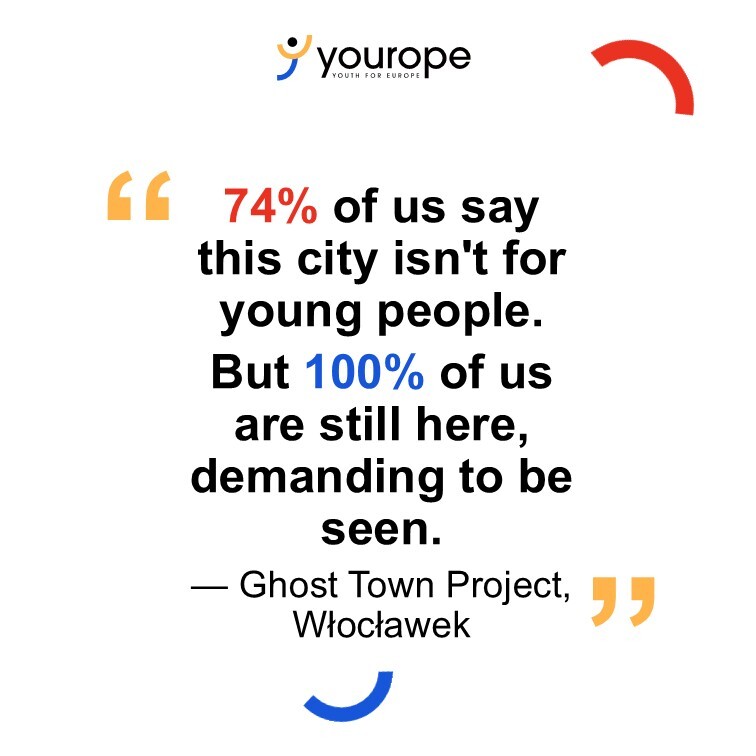
Włocławek, Poland. Population 100,000. A city where 74% of young people say it is not a good place to grow up in, and where most plan to leave — with no intention of coming back.
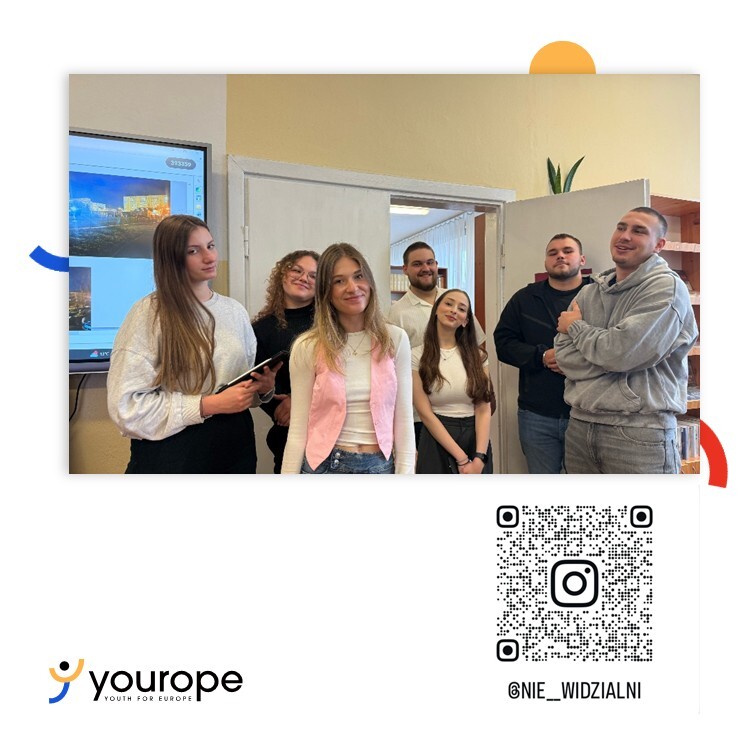
Rather than accepting this as a fixed reality, a group of young researchers decided to prove that they were anything but invisible. As part of the YOUROPE project, students from the University of Lodz launched a Community-Led Research and Action (CLRA) study to understand why their city feels like a ghost town — and what might change that.
Research led by those who live it
The scale of what they undertook was significant. The young researchers surveyed 191 young people across technical schools, vocational schools, and grammar schools, conducted six in-depth interviews with local stakeholders, and analysed 501 minutes of recorded material. The picture that emerged was consistent: youth feel absent from city decision-making, public spaces feel unwelcoming, and the future seems to lie elsewhere.
Yet the research also revealed something the statistics had been missing — genuine desire for change. Young people in Włocławek have specific, creative ideas: drive-in cinemas, school chill-out zones, better communication channels, and meaningful platforms for youth participation. The energy for change is there. What has been missing is the space to direct it.
From research to action
The team did not stop at data collection. They created the Instagram account @nie__widzialni — “the invisible” — to share their findings publicly, spark conversations, and hold their city accountable. Research became advocacy, and advocacy became identity.
This is Community-Led Research and Action at its most purposeful. When young people lead their own investigations, they do not simply collect data — they claim their voice. CLRA reframes the question entirely: youth are not problems to be solved, but experts on their own lives, with something essential to contribute to the cities that shape them.