On 21st July 2025, the University of Augsburg and Holbein-Gymnasium hosted a groundbreaking Democracy Day, bringing together 177 pupils and 40 university student researchers for co-created workshops that put young people’s voices at the centre of democracy education and European citizenship.
How can democracy education truly resonate with young people whilst fostering a sense of active European citizenship? This question was at the core of Democracy Day at Holbein-Gymnasium in Augsburg—a large-scale initiative marking the finale of the first round of Community-Led Research and Action (CLRA) events in the YOUROPE Horizon Europe project.
A Different Approach to Democracy Education
Led by Prof Dr Andrea Szukala at the University of Augsburg’s Chair of Civic Education, in collaboration with teacher Anne Büchler and her colleagues at Holbein-Gymnasium, the event demonstrated a fundamental shift in how democracy education can work. Rather than imposing democratic education from above, the approach was to shape it together with young people, making core European values such as participation, pluralism, and human rights tangible in the process.
Starting with Young People’s Questions
The foundation for Democracy Day was laid through careful preparation. University students surveyed pupils at Holbein-Gymnasium beforehand to identify their concerns and discussion needs on topics such as democracy, social cohesion, and civic participation. These insights then formed the basis for designing 16 interactive workshops.
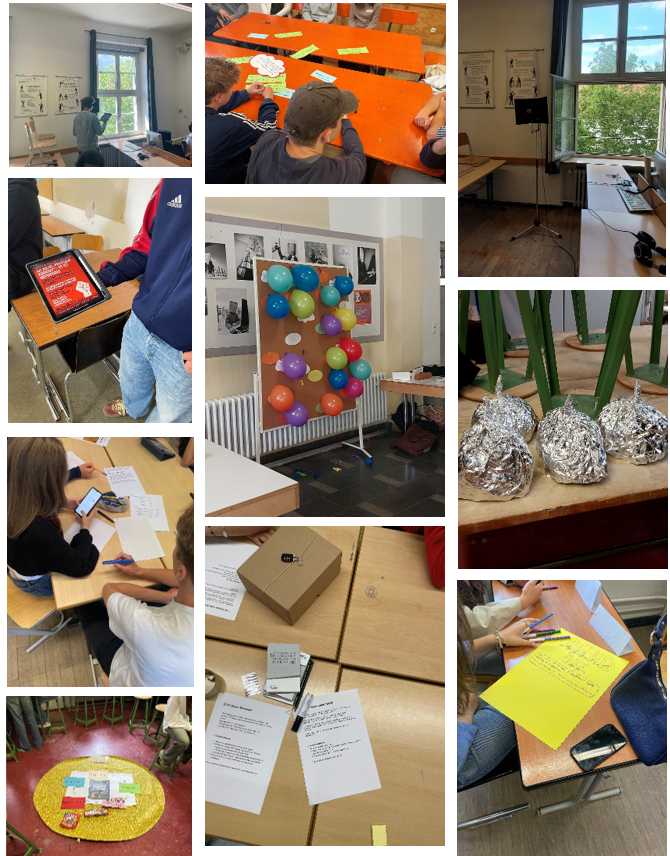
On the day itself, 177 pupils participated in hands-on workshops including “Real Talk – How do you deal with populist slogans?”, custom-designed democracy escape games, poetry slams and raps on social themes, and deep conversations about future, solidarity, and civic agency—exploring their roles both as citizens of Augsburg and as young Europeans.
When Democracy Education Connects with Reality
“The enthusiasm and engagement of the pupils clearly demonstrated how impactful democracy education can be when it starts from young people’s lived experiences and questions,” Prof Szukala reflected. For the 40 university students involved, many of them future teachers, the event provided invaluable experience in what it means to engage with learner interests, create spaces for democratic debate, and think beyond national frameworks.
Why This Matters for Europe’s Future
Democracy Day wasn’t just about one school or one event. It exemplifies a new way of thinking about how we engage young voices in shaping our democratic future. When we leave young people out of decision-making, we all miss out—on fresh ideas, innovative solutions, and the energy needed to tackle tomorrow’s challenges.
The YOUROPE project, funded by the EU’s Horizon Europe programme, seeks to develop innovative approaches to European democracy education and citizenship learning in close collaboration with young people. Democracy Day at Holbein-Gymnasium stands as a compelling example of how research, schools, and youth can co-create a vibrant democratic public sphere across Europe.
The Way Forward
As word of the event’s success spreads throughout Augsburg’s educational community, it points the way towards more participatory, inclusive, and genuinely youth-led democracy education. When democracy education connects with young people’s reality and starts from their questions rather than predetermined curricula, it transforms from a lesson into lived practice—and young people prove they deserve more than a seat at the table. They can lead the conversation.